

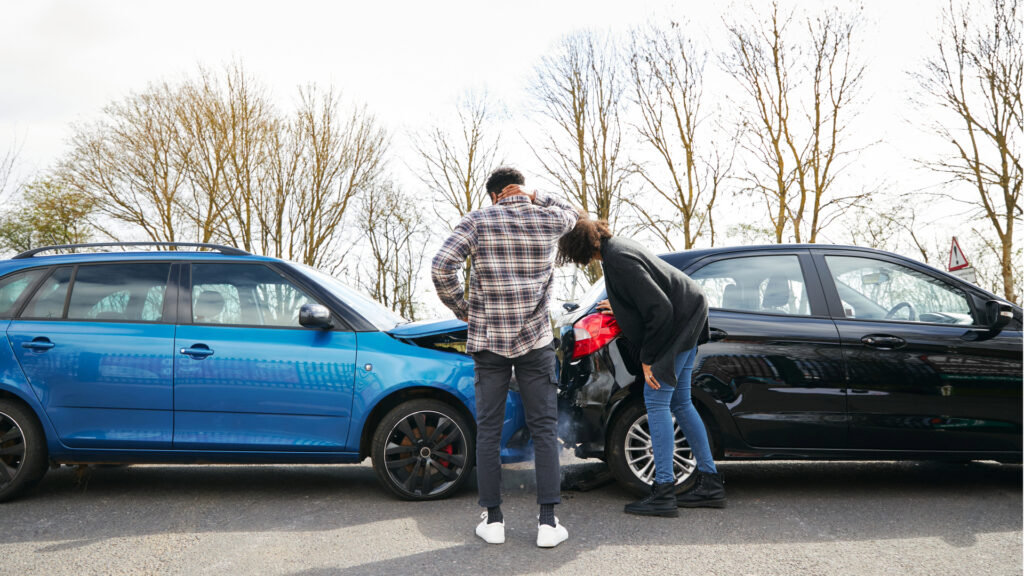
If you’ve been in a rear-end collision in Nevada, most people would assume the driver who hit your car would be found responsible, right? It makes sense — we usually think the rear driver is always at fault.
But fault isn’t always that simple to figure out. So, who is at fault in a rear-end collision?
There are a bunch of factors under Nevada law that can make determining who’s really liable pretty complicated.
While rear drivers tend to be presumed negligent, rear-end collision fault is not automatic in every case.
Situations like the front driver braking recklessly or bad weather conditions can reduce the liability of the rear vehicle.
Figuring out accurate fault matters a lot to everyone involved, because even injury victims can have their compensation reduced if they shared any blame for causing the accident.
Want to protect your rights if you’ve been rear-ended?
Read on, because we’re going to unpack:
- Why Nevada laws often presume the rear driver is negligent
- Scenarios where the front driver may hold some responsibility
- Ways to gather evidence if you think liability is unfairly on you
- How to work with insurance companies on disagreements over fault
- Legal options for contesting a liability decision
Getting rear-ended happens in a flash, but properly assigning fault takes time and investigation. Rear-end collisions account for 29% of all car accidents, so it’s important to understand Nevada’s rules on liability. This knowledge can help you avoid accepting unfair blame if you get rear-ended.
What the Law on Rear-End Car Accidents in Reno Nevada Says
The law on rear-end car accidents in Reno requires drivers to maintain a reasonable following distance based on traffic, speed, and road conditions. Nevada also follows comparative negligence rules, meaning rear-end fault can be shared when evidence shows both drivers contributed to the collision and resulting injuries.
1. Why Rear Drivers Are Usually Presumed At-Fault in Nevada
In Nevada, like most states, there is a legal presumption that the rear driver is at fault in a rear-end collision.
This assumption places the burden on the trailing driver to prove they were not negligent or reckless to avoid liability.
But why are rear drivers so often considered negligent in these crashes? There are a few common reasons:
- Distracted driving is an epidemic on Nevada roads, especially with more drivers texting, eating, or fiddling with infotainment systems. In fact, over one-third of drivers admit they’ve nearly crashed while driving distracted. Taking your eyes off the road reduces reaction time and ability to brake when needed. This makes rear-end collisions much more likely if the front vehicle brakes suddenly for any reason.
- Tailgating or following too closely gives you inadequate space to stop safely if the front driver brakes. Nevada law requires leaving enough following distance to account for speed and road conditions. Violating this rule often leads to rear-end crashes.
- Unsafe speeding during congested rush hours or on slick Nevada highways, excessive speeding reduces control and extends stopping distance. This makes rear-end collisions more probable, even if the front driver errs.
By understanding the common negligent actions that lead to rear-end crashes, injured Nevada drivers can build strong cases attributing fault correctly after an accident.
Common Causes That Determine Rear-End Fault
- Following too closely: Not leaving enough stopping distance when traffic slows or stops.
- Distracted driving: Phone use or other distractions that delay a driver’s reaction.
- Speeding: Higher speeds increase stopping distance and reduce reaction time.
- Sudden or unsafe braking: Unexpected braking without reasonable cause may shift some liability.
- Unsafe lane changes: Cutting into another vehicle’s path without enough space.
- Poor road or weather conditions: Rain, debris, and limited visibility can influence rear-end fault.
- Defective vehicle equipment: Broken brake lights or mechanical problems may contribute to the collision.
2. Exceptions: When the Front Driver May Be At-Fault
When is a Rear-End Collision Not Your Fault If You’re the Rear Driver?
While rear drivers are typically presumed negligent, there are situations where the front driver may share fault or be solely responsible for a rear-end crash.
Proving these mitigating circumstances can help injury victims contest liability.
Here are a few of the potential scenarios where the front driver may be negligent:
- Braking suddenly or stopping for no reason can leave the rear driver unable to react in time.
- Faulty equipment such as broken brake lights can also make it difficult for the rear driver to break in time.
- Weaving in and out of traffic or cutting off the rear driver can lead to unavoidable collisions, especially during rush hour.
- Not using turn signals gives rear drivers little warning of imminent speed or direction changes.
- A driver who reverses suddenly into flowing traffic creates a major hazard.
- Reckless driving like speeding, ignoring traffic signs/lights, and other reckless behaviors leave rear drivers helpless to prevent crashes.
In these situations, the front driver would likely share fault or possibly be fully liable for the ensuing rear-end accident. An attorney can help establish these negligence exceptions.
Who is at Fault in a Rear-End Accident Involving Multiple Vehicles?
In a multi-vehicle rear-end accident, fault may involve more than one driver. Investigators look at which vehicle triggered the chain reaction, whether drivers followed too closely, and whether anyone had enough time to stop. Nevada’s comparative negligence rules may divide responsibility among multiple drivers based on each person’s contribution to the crash.
3. Gathering Evidence to Challenge Rear-End Collision Fault Findings
If you believe you’ve been wrongly assigned fault for a Nevada rear-end accident, collecting compelling evidence is crucial to contesting liability.
An experienced attorney can help obtain documentation that proves the inaccuracy of a fault finding.
Here are a few useful evidence sources that you and your attorney may use:
- An official accident report containing the officer’s statement and assessment of fault.
- Eyewitness accounts with testimony from passengers and bystanders about what occurred.
- Video footage from security cameras or dash cams that visually prove circumstances.
- Vehicle computer data recording speed, braking, operations etc.
- Photographs documenting damage, skid marks, hazards, traffic signs/lights.
- Medical records that show any pre-existing conditions that could have contributed.
- Accident reconstruction analysis where technical specialists examine physics evidence.
- Vehicle maintenance logs to prove or disprove alleged equipment defects.
Compiling this objective, fact-based evidence builds a compelling case to press insurers to revise initial liability decisions.
Our skill accident attorneys know how to obtain documentation legally and present it persuasively — making us one of your best assets in challenging fault findings.
4. Legal Basis to Contest Fault Findings
If an insurance company disputes your evidence and rejects a rear-end accident liability claim, there are legal grounds to compel a re-evaluation. An attorney can leverage these to negotiate a fairer outcome.
- Burden of proof remains entirely on the insurer to definitively prove the rear driver’s negligence caused the crash.
- Prior favorable rulings in comparable cases can be cited to hold insurers to certain liability determination standards.
- Nevada’s comparative negligence laws allow recovery even if the victim was partially at fault, which insurers must consider.
- Expert accident reconstructions can scientifically disprove faulty liability assumptions using physics evidence.
- Sudden emergency doctrine argues that collisions resulted from hazardous external conditions outside the driver’s control.
- Rebuttable presumption laws expressly permit presenting evidence to rebut presumed rear driver negligence.
Relying on legal experts to compellingly argue these points can pressure insurers to take a more objective look when claims are reasonably contested.
How Nevada’s Comparative Negligence Rule Affects Your Payout
Nevada follows a modified comparative negligence rule. If you are partly responsible for a rear-end collision, your compensation may be reduced by your percentage of fault. For example, if you are awarded $100,000 but found 20% responsible, your recovery may be reduced to $80,000. Recovery is generally barred when your negligence is greater than the combined negligence of the parties you are seeking damages from.
5. Navigating the Claims Process and Working with Insurers
If involved in a Nevada rear-end collision, exercise caution when interacting with insurance adjusters regarding accident liability and fault.
- Prematurely accepting blame could irreparably harm your ability to contest fault later if exceptions legitimately apply.
- Consult an attorney before concluding liability discussions so you understand your rights and options fully.
- An attorney can highlight evidence on your behalf that properly supports invoking exceptions to presumed rear driver liability.
- If insurers dispute non-fault arguments and reject reasonable compensation offers, legal experts can strengthen your negotiating position.
- Refusing to accept an insurer’s unilateral conclusions without a thorough review of the evidence, law, and your options is key to protecting your rights.
Working with knowledgeable legal counsel from the outset provides the strongest foundation for obtaining a maximized, fair claim resolution.
6. Don’t Accept Fault Prematurely
If you believe you have been wrongly assigned fault in a Nevada rear-end accident, it is important to avoid immediately conceding liability, even informally.
- Admitting fault to insurers can severely undermine your ability to contest liability at a later stage, even if mitigating factors reasonably apply.
- Consult an attorney first to understand your options before accepting an insurer’s liability decision.
- Hire a lawyer to protect your rights if the liability determination is disputed and negotiations reach an impasse.
- Pursue settlement negotiations further, or litigation if needed to compel insurers to revise unfair liability findings.
- You have the right to reject inadequate settlements and continue seeking fair compensation through legal channels.
Exercising caution before accepting blame demonstrates you will not tolerate liability decisions made in bad faith. This empowers your legal position.
What to Do Immediately After Being Rear-Ended in Nevada
After a rear-end collision, prioritize safety and preserve evidence that may affect the fault determination. Move to a safe location when possible, call law enforcement, exchange insurance information, photograph the vehicles and scene, gather witness details, and seek medical attention for any injuries. Avoid admitting fault or making assumptions about what caused the crash before the evidence is reviewed.
FAQs About Who is at Fault in a Rear-End Collision
Can the front driver ever be 100% at fault?
Yes. Although the rear driver is often considered responsible, the front driver may be fully at fault when evidence shows their actions caused the collision, such as reversing unexpectedly, making an unsafe lane change, or driving with defective brake lights.
Does insurance always blame the rear driver?
No. Insurance companies typically investigate the circumstances before assigning liability. They may review police reports, vehicle damage, witness statements, video footage, and other evidence to determine who is at fault in a rear-end collision and whether responsibility should be shared.
How long do I have to file a rear-end accident claim in Nevada?
For most Nevada personal injury lawsuits arising from a rear-end accident, the general statute of limitations is two years. Certain exceptions can affect the deadline, so speaking with an attorney early can help protect your ability to pursue compensation.
Get Legal Help Pursuing Fair Compensation
As we’ve seen, determining fault and liability in Nevada rear-end accidents involves much more than just presuming the rear driver is always negligent.
There are many potential factors that could implicate the front driver or reduce the trailing vehicle’s liability, and pinpointing the true at-fault party requires careful investigation and evidence gathering.
If you’ve been injured in a Nevada rear-end collision, don’t just accept an insurer’s initial liability finding.
Consult with our experienced attorneys to examine your options and build the strongest possible case for recovering fair compensation.
Our legal experts can help you:t
- thoroughly investigate the accident circumstances
- obtain evidence proving your lack of sole fault
- leverage laws and precedents to compel proper liability consideration
- negotiate the maximum settlement you deserve
Don’t assume you’re powerless if wrongly assigned fault — knowledgeable legal advocates can correct unjust liability determinations.
Protect yourself, your family, and your rights by contacting our firm for a free consultation if you or a loved one has been injured in a Nevada rear-end accident. Our compassionate attorneys are here to help you recover and rebuild your life.